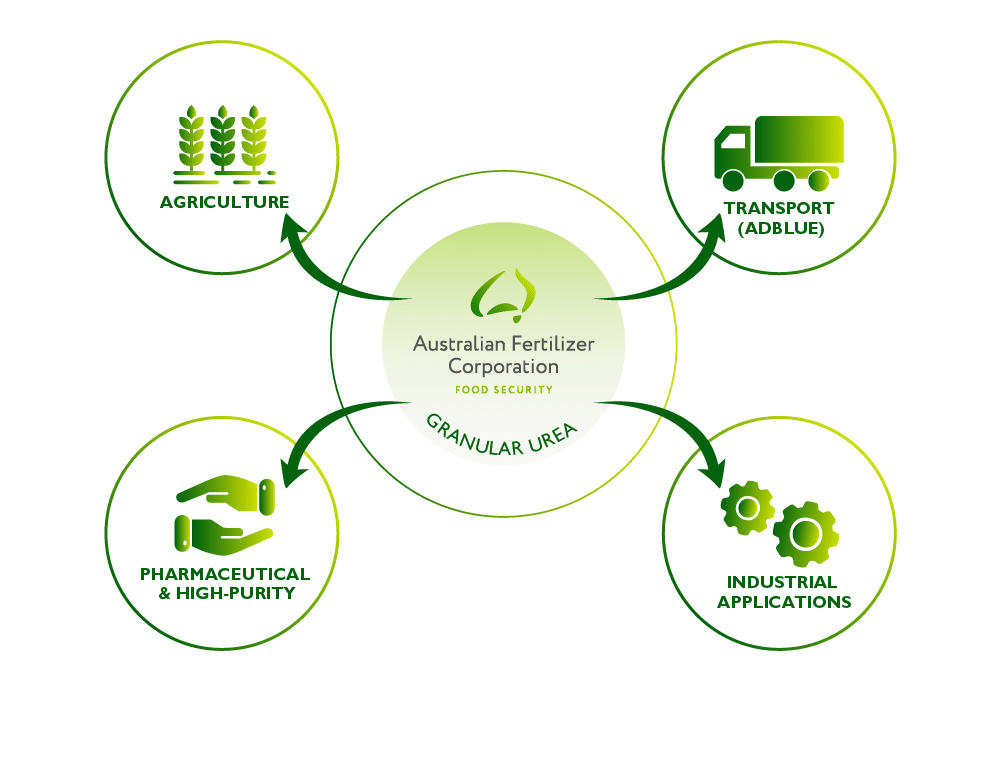
Established, large-scale end markets with diversified demand.
Agriculture
The Food and Agriculture Organization (FAO) of the United Nations estimates that nitrogen fertilisers, including urea, can increase crop yields by 50–100%.
Global food production is projected to increase by approximately 70% by 2050 to support a population of 9.7 billion.
Urea, with a nitrogen content of 46%, is a critical input to agricultural productivity across both developed and developing economies.
It is also used as a supplementary input in feed rations for cattle and other ruminants.
Known globally as AdBlue or Diesel Exhaust Fluid (DEF), this urea-based solution is used in diesel engines to reduce harmful nitrogen oxide (NOx) emissions, converting them into nitrogen and water.
The global AdBlue/DEF market is valued at approximately USD 30 billion and is projected to grow at a CAGR of around 4%, reaching USD 44.5 billion by 2033.
Global AdBlue/DEF up 4% CAGR
Industrial
Urea is used as a raw material across a range of industrial applications, including the manufacture of plastics, resins and adhesives.
It is also used as a de-icing agent for roads and runways, as an alternative to corrosive salts, and in applications such as cold packs and fire retardants in chemical fire extinguishers.
Additional uses include dyes, leather processing, and metal and water treatment.
AFC Urea
Broad, Global Industrial Applications
Plastic
Road Salting
Water Treatment
Fire Extinguisher
Leather Goods
Pharmaceutical
Urea is widely used as a raw material in pharmaceutical applications, including over-the-counter formulations and topical treatments for a range of dermatological conditions.
Urea and its derivatives are also utilised in therapeutic compounds, including anti-bacterial, anti-fungal and anti-viral applications.
It is approved by regulatory authorities, including the FDA and TGA, for use in pharmaceutical manufacturing.